Xi Zhi Tang Gallery
B38 / Taipei / Taiwan
+886-2-8780-7958
xizhitang@gmail.com
https://www.xizhitang.com.tw/

+886-2-8780-7958
xizhitang@gmail.com
https://www.xizhitang.com.tw/
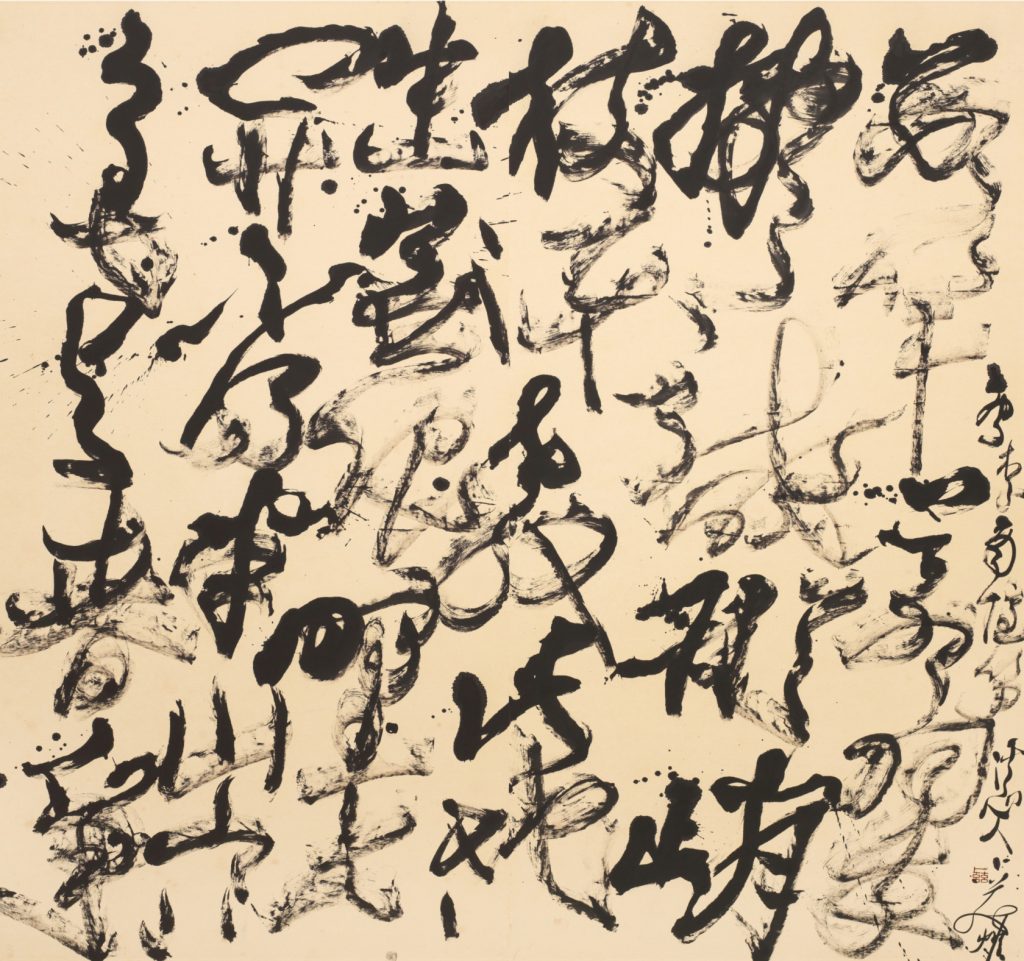
Bu Zi (1959–2013) , whose real name is Chen Zong-Chen, was born in Xixin, Tainan. Bu Zi is a seminal figure in contemporary Taiwanese calligraphy. Trained from an early age under the influence of his father, Bu Zi later studied with esteemed calligraphers Tsao Chiu-Pu, and learned classical poetry from Chou Chih-Fu, grounding his practice in a solid classical foundation. His work centers on calligraphy, with wild cursive (kuangcao) as his most distinctive mode—characterized by bold strokes, dynamic energy, and a sweeping sense of rhythm and motion. He is widely recognized for pushing the expressive boundaries of cursive script into the realm of contemporary aesthetics. Rooted in Eastern philosophy, Bu Zi emphasized the integration of technique and Dao, treating calligraphy as a path of spiritual cultivation. He developed his own visual language through disciplined practice and internal reflection, often blending various traditional scripts such as seal and clerical styles, and innovating with personal approaches like the "Eight-Stroke Rotational Script." His works reflect freedom, immediacy, and an unrepeatable presence. Bu Zi was known for his independent spirit and unwavering ideals. He refused to participate in competitions, focusing solely on the essence of the art. His artistic creed—"master the ancient to create the new"—called for spiritual resonance with tradition, while forging new forms and personal style in the present. His calligraphy, beyond technique, embodies a life philosophy infused with Eastern metaphysical thought. Throughout his life, Bu Zi was dedicated to the advancement of wild cursive, raising the status and vision of contemporary calligraphy in Taiwan. His works have been exhibited in major Taiwanese art institutions, and his philosophy has had a lasting influence on both contemporary calligraphy and arts education.